Support users wherever they work
Use desk phones and softphones to give suitable users access to business telephony across office, hybrid and mobile working environments.
Choose a cloud based phone system when you want flexible business telephony without maintaining traditional PBX infrastructure, with support for users, call routing, numbers, handsets and day-to-day changes.

For SMEs without a dedicated voice engineer, ongoing support matters as much as the features. The right cloud phone system should make user changes, call-flow updates, fault ownership and growth straightforward.
Use desk phones and softphones to give suitable users access to business telephony across office, hybrid and mobile working environments.
Add starters, leavers, groups and opening-hour changes without maintaining specialist PBX infrastructure internally.
Decide how inbound calls, overflow, voicemail and out-of-hours calls should be handled if a site or connection is unavailable.
Use a cloud based model that can accommodate new users or sites without replacing a traditional on-site phone system.
We match the platform and endpoints to the people using them, from fixed desks and reception to hybrid staff and teams moving around a site.
Browse Yealink handset options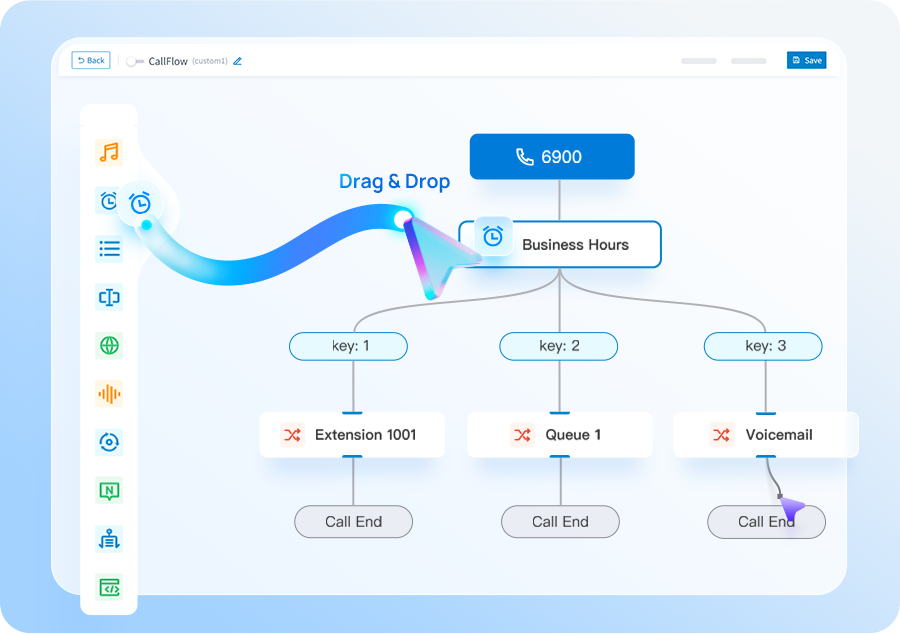
Define response needs, admin responsibilities and the changes you expect to make during a normal month.
Agree users, groups, reception flow, overflow, voicemail and out-of-hours behaviour around how your business actually handles calls.
Select Yealink handsets and softphones by role, then preconfigure them before deployment.
Use real call patterns to refine queues, routing and user setup as your business settles into the new system.
A cloud based phone system works well for SMEs that want flexible business telephony without maintaining PBX infrastructure themselves.
Your SME wants a flexible business phone system with one supplier to design, migrate and support the environment, without maintaining PBX infrastructure internally.
If your priority is specifically a managed hosted telephony service, see Hosted Telephony. If you want a Yeastar P-Series platform with deployment choice, compare the Yeastar page.
Tell us what you have today and what needs to improve. We’ll explain the options and recommend the setup that best fits your business.
We plan number porting, call flows, connectivity and user training before the system goes live.
We’ll use the information to size the setup and make the first conversation useful.
Use these guides to understand migration, system options and capacity before you get in touch.
Cloud, appliance/software and Yeastar + Teams integration compared by operating model.
See the main stages involved in moving business numbers to a new provider.
Estimate a sensible starting point from concurrent-call demand rather than user count alone.
Short answers to the questions we are most often asked about this type of system.
It is a business phone system where the core telephony platform is hosted rather than maintained as traditional PBX hardware at your office.
It can suit SMEs that want flexible business telephony, remote or hybrid working options, simpler user changes and support without maintaining PBX infrastructure internally.
Yes. A mixed endpoint design can make sense: fixed roles can use Yealink handsets while hybrid or mobile users use supported softphone clients.
In many cases yes. Number ranges are checked for portability and the port is planned as part of the migration.